People
Meet the Dockers: Twinkle Jayakumar
Meet the Dockers: Twinkle Jayakumar
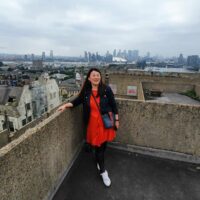
As part of the Meet the Dockers interview series, we spoke with local resident, Twinkle Jayakumar. As a Citizen Social Scientist for University College London (UCL)’s 10-year 'Prosperity in East London study, Twinkle bridges the gap between residents and policymakers to help lived experiences inform local regeneration. She talks to us about her connection to the Royal Docks and why resident-led research is vital for a more inclusive future.
Tell us about yourself and your connection to the Royal Docks
I live in the Royal Docks and choose to live here as it has a strong sense of community, family-focused activities, green spaces, and excellent transport links. Living locally and working in the area has given me a deep understanding of its strengths, challenges, and community dynamics, shaping my commitment to supporting resident-led research and participation in Newham.
I’m a certified Citizen Social Scientist and Community Researcher with extensive experience delivering community-led, participatory research across east London. My background combines community research, civic advocacy, teaching support, co-design, and public engagement, with a strong focus on research that supports bottom-up policy change. Through UCL projects, including research in and around North Woolwich, I’ve contributed to reports, zines and work on the Prosperity in East London Study 2021–2031.
Tell us about the UCL Prosperity in East London Study 2021– 2031
The UCL Prosperity in East London 2021– 2031 study tracks over 4,000 households across 15 areas of East London including the Royal Docks. It follows the changes driven by regeneration combining household surveys with research led by Citizen Social Scientists; residents trained to work as researchers in their own communities.
As a Citizen Social Scientist, I play a key role working directly with residents to gather qualitative data and ensure that lived experience informs research findings, policy discussions, and local decision-making. We explore how regeneration affects people from different backgrounds, specifically asking: who benefits and how? And what are the obstacles to prosperity?
What impact has this study had on the area?
The study has helped create positive change by centering community voices and lived experience in conversations about regeneration, wellbeing, and local policy. By using participatory and qualitative research methods, the programme has produced evidence that local authorities, developers, and institutions can use to design more inclusive and responsive policies.
Public-facing outputs, presentations and exhibitions have also helped increase visibility of community perspectives, ensuring residents’ experiences are recognised and taken seriously by decision-makers.
How was the research conducted?
Since 2021, our team of Citizen Social Scientists and Community Researchers has worked across east London on several UCL-led projects. We engaged people in community settings and public spaces using interviews, focus groups, walking ethnographies, surveys, and photography.
The response was largely positive. Residents valued having their lived experiences treated as important evidence and especially enjoyed participatory methods that allowed them to help shape the research rather than just providing data.
What have been the highlights?
My role was very rewarding, as I worked closely with my local community and saw their insights directly influence research and policy discussions.
I also really valued the collaborative nature of the work, which brought together residents, academics, local authorities, and private sector partners in meaningful ways.
Another highlight was contributing to exhibitions and research zines, which made the findings more accessible and engaging for wider audiences.
How do you view the role of this study?
This study is important because it goes beyond traditional success measures to centre the lived experiences of local people. Unlike short-term economic assessments, the UCL Institute of Global Prosperity’s 10-year study captures the social, cultural, and wellbeing factors that shape everyday life.
By using citizen-led methods, the study turns residents into active contributors rather than research subjects. This builds trust and produces meaningful evidence that helps decision-makers understand local priorities and inequalities. Ultimately, this work supports more inclusive, informed policy that reflects what prosperity truly means to communities.
The future of the Royal Docks presents both opportunity and responsibility.
Twinkle Jayakumar
Why would you encourage other residents to get involved with community initiatives and volunteering?
Community initiatives and volunteering give residents a direct voice in shaping the places they live. Through my experience, I’ve seen how resident involvement leads to better-informed decisions, stronger community networks, and more inclusive outcomes.
Getting involved also builds confidence, skills, and a sense of collective ownership, helping communities influence policies and services that affect their everyday lives.
What are your thoughts on the future of the Royal Docks?
The Royal Docks is a complex and evolving area shaped by strong local communities alongside significant regeneration and development. Through my research involvement, I’ve seen ongoing changes, including increased investment, new infrastructure, and shifting public spaces.
At the same time, research has highlighted the importance of ensuring development responds to residents’ needs, histories, and concerns, particularly around inclusion, safety, and access to opportunity.
The future of the Royal Docks presents both opportunity and responsibility. Ongoing development has the potential to improve infrastructure, services, and economic opportunities, but only if it is guided by meaningful community engagement.
Based on my experience, ensuring that residents’ voices continue to inform planning, policy, and regeneration will be essential to creating a future that is inclusive, equitable, and reflective of local needs.
More information
- Find out more about the UCL Prosperity in East London Study
- Read the summary of findings
- Watch a short video on the impact so far