Regeneration news
Nature in action - the Royal Docks rain garden
Did you know the Royal Docks is home to one of the UK’s largest rain gardens? As our city is adapting to a changing climate, this growing network of planting along the Royal Docks Corridor offers a practical example already taking shape. Stretching between Canning Town and London City Airport, it is quietly transforming the streets around it, making them greener, cleaner and better able to cope with heavy rainfall.
What is a rain garden?
At first glance, it looks like a planted strip alongside the road. But this rain garden is doing much more than adding colour.
Rain gardens are designed to capture rainwater from roads and pavements before it reaches the drains. Instead of overwhelming the system during heavy rainfall, water is absorbed, filtered and slowly released back into the ground.
It’s a simple idea, but one that makes a big difference.
Greening a key route
The rain garden sits at the heart of the wider Royal Docks Corridor project, led by Newham Council in partnership with the Royal Docks Team.
This long-term programme is reshaping a key 6km route through the area, turning it into a more people friendly space with better walking and cycling connections, more greenery and improved crossings. Alongside these changes, the rain gardens help bring nature back into a highly urban setting.
A boost for biodiversity
The first phase alone introduced more than 5,000 plants along the corridor, alongside new trees planted between Pontoon Dock and West Silvertown.
Over 50 different tree species were carefully selected to thrive in a mix of conditions, from open, exposed areas to shaded sections beneath the DLR. As the planting establishes, it is already creating new habitats and food sources for pollinators.
Across the corridor, more than 4,000 square metres of rain gardens now form a continuous green network, helping wildlife move more easily through the Royal Docks.
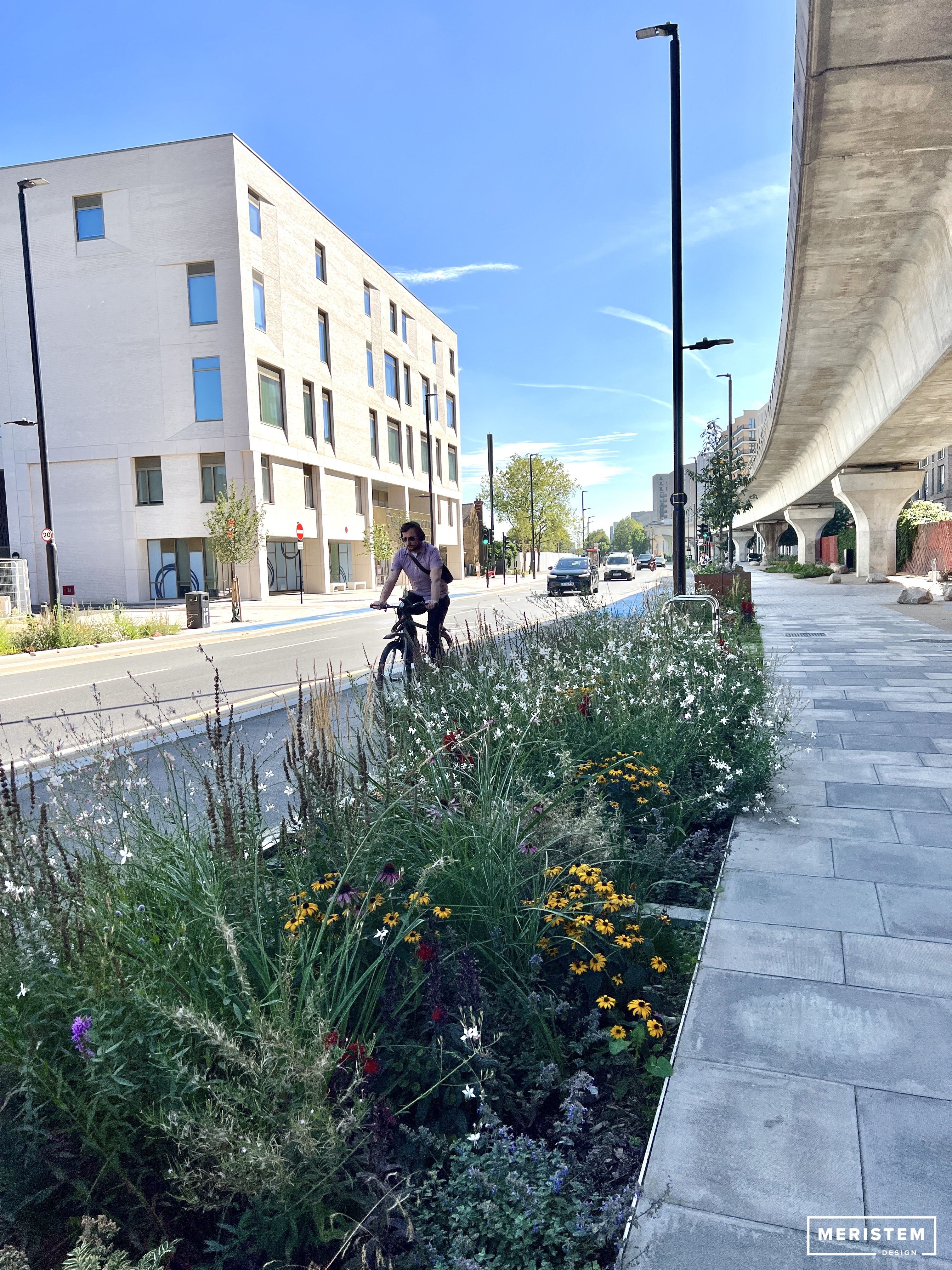
Royal Docks rain garden
Designed for the future
Beyond the planting, the rain garden plays an important role in how the city responds to climate pressures. By slowing and filtering surface water, it helps reduce the risk of local flooding while improving water quality.
It also contributes to better air quality, cooler streets and more welcoming public spaces, small changes that make a noticeable difference day to day.
A changing streetscape
The transformation is already visible. The corridor now includes dedicated cycle lanes, wider pavements, safer crossings and more than 180 newly planted trees.
As new phases progress, even more improvements are on the way. Around Western Gateway, near City Hall, the next phase of works will introduce new public spaces, additional planting and further sustainable drainage features, alongside redesigned walking routes and safer connections.
Together, these changes are helping to create streets that do more than move traffic, supporting nature, improving wellbeing and making the area easier to move around.
Looking ahead
The project continues to roll out in phases, with planting and public realm improvements ongoing across the corridor. As the gardens mature, they will only become richer and more established.
For something that sits quietly alongside the road, the impact is surprisingly far reaching. It’s a reminder, that practical, everyday design choices can play a big role in shaping a greener city.
Take a look
Want to see the rain garden in action? Watch this video by Meristem Design, who led the first phase of the transformation.