People
Meet the Dockers: Adrian de León
For those unfamiliar with Fight for Peace, can you tell us a bit about the organisation and its work in the Royal Docks?
Fight for Peace supports young people aged 7 to 25 to become champions both in the ring and in life. Alongside free boxing and martial arts sessions, we offer mentoring, education and employability support, as well as leadership opportunities. Everything we do is designed to help young people build confidence and unlock their potential.
Can you tell us about your role?
I’ve been part of the Income Generation Team at Fight for Peace since 2022. My role is to help secure the funding that makes this work possible, supporting around 1,400 young people each year. I focus on fundraising through trusts and foundations, connecting the work we do with organisations that want to support young people and communities.
Being based in the Academy has allowed me to connect directly with members through conversations, sessions and groups like Man Talk, as well as through local networks such as the Newham Youth Partnership, helping me build a strong understanding of the community.
What role does Fight for Peace play in supporting young people across the Royal Docks?
At its core, Fight for Peace provides something really valuable, a third space where young people can go outside of school or home.
Spaces like this are becoming increasingly rare, but they’re essential. Our Academy in North Woolwich offers a free, safe place where young people can train, socialise and build relationships. Just as importantly, it’s a space where they feel supported and included.
We also take what we learn locally and share it nationally. Through partnerships with organisations like Sport England and Comic Relief, we’re able to amplify our impact and contribute to wider conversations about young people and communities.
What opportunities can young people access through Fight for Peace?
We offer a two year course for young people aged 16 and over, leading to an NCFE Level 3 Extended Diploma in Sport and Physical Activity.
The course combines classroom learning with practical experience. Students cover topics such as anatomy, fitness and coaching, while also taking part in a boxing development pathway where they can train, spar and potentially compete.
It’s a strong option for young people who may not be in education or training, offering both a recognised qualification and a supportive environment.
How can involvement with Fight for Peace help young people develop skills, confidence and future career prospects
This course gives young people a clear pathway into further education or a career in sport.
Alongside the course, they can also access mentoring, leadership opportunities and wider support. At an important stage in their lives, it provides structure, confidence and something to work towards.
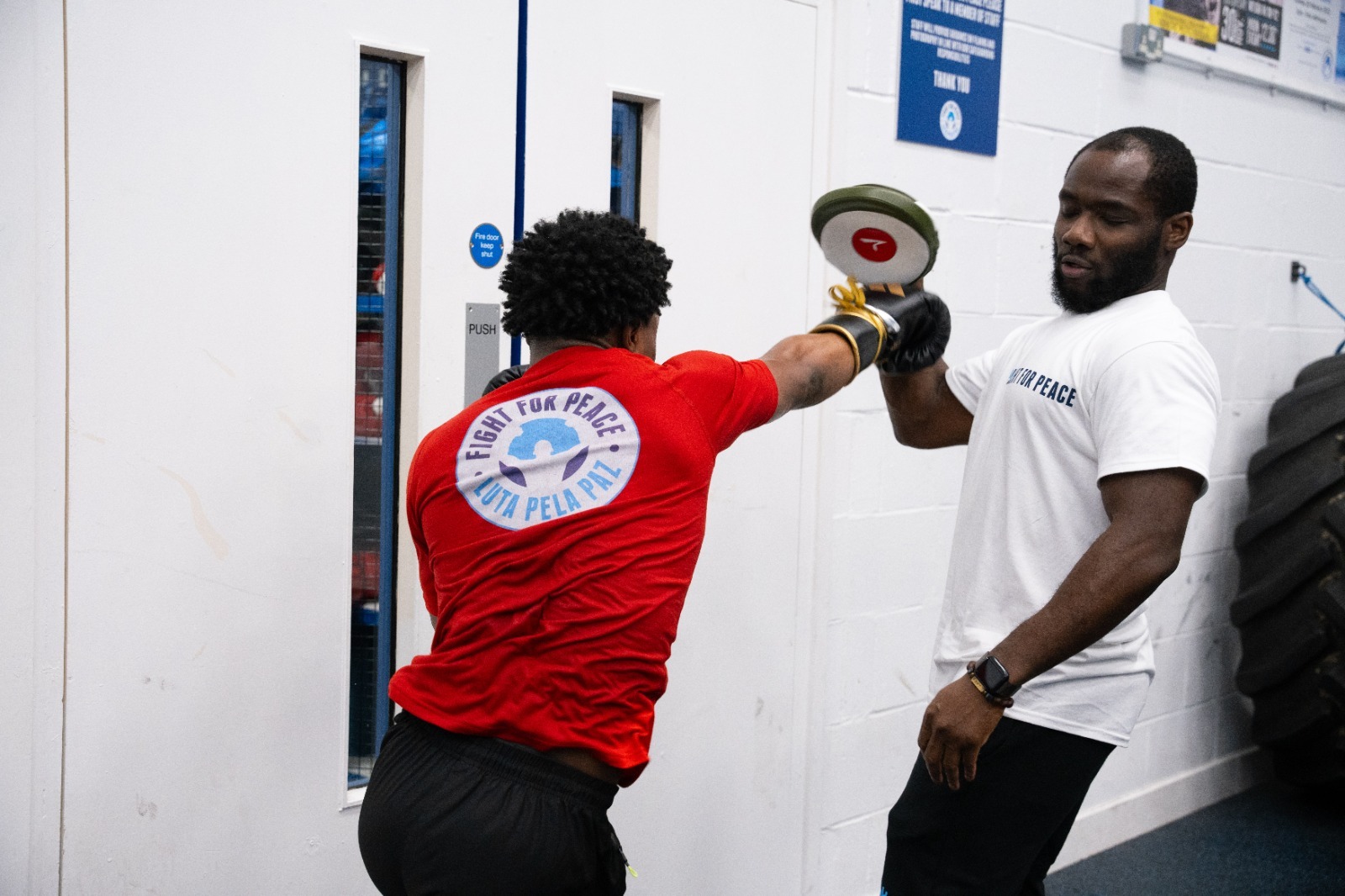
Boxing training at Fight for Peace
Can you tell us about the Women in Combat Sports campaign and the difference it is making?
The campaign, Martial Arts Stories by Women, was created by our Young Creatives, a group of young people who help produce much of our creative content.
It shares stories of women in combat sports, a space that has traditionally been male dominated. Through film, photography, poetry and design, it brings to life the journeys of three women, Temmy, Javic and Luna, who are connected to Fight for Peace.
Driven by our young people, the campaign reflects on our ongoing commitment to making sport more inclusive.
Is there a story that really captures the impact of Fight for Peace on an individual's life or journey?
Temmy’s story really captures what Fight for Peace is about.
When Temmy first joined, she was quite reserved. Through sessions like Judo, boxing and Fighting Fit, she gradually built confidence. Through programmes like Lutadoras and Youth Power, she found her voice and stepped into leadership.
She also discovered a passion for poetry, performing her own work at a local exhibition and later delivering workshops for others. Over time, she moved from participant to facilitator, supporting others on their own journeys.
Now, she has big ambitions in music and poetry. What stands out most is her belief in herself and what she can achieve.
What’s next for Fight for Peace?
We want to build on the progress we’ve made and reach even more young people.
Over the past year, we’ve supported nearly 1,400 young people, with many achieving outcomes in education and employment. We’re continuing to grow our sports provision and are excited to deliver the new education programme.
There are lots of ways to get involved, from taking part in sessions to joining leadership groups like our Youth Power board. It’s all about making sure young people have a voice and a space where they feel they belong.
Find out more
To learn more about Fight for Peace and the opportunities available for young people in the Royal Docks, visit Fight for Peace.